




How does RFID work?
RFID stands for Radio-Frequency Identification, a technology that allows data to be transmitted contactlessly by radio waves. The system consists of two main components: an RFID chip, integrated into a card or an object, which holds the stored data, and a reader that reads the chip data by radio. As soon as the chip is near the reader, it is activated by the reader’s radio field and sends the stored data – with no direct contact at all.
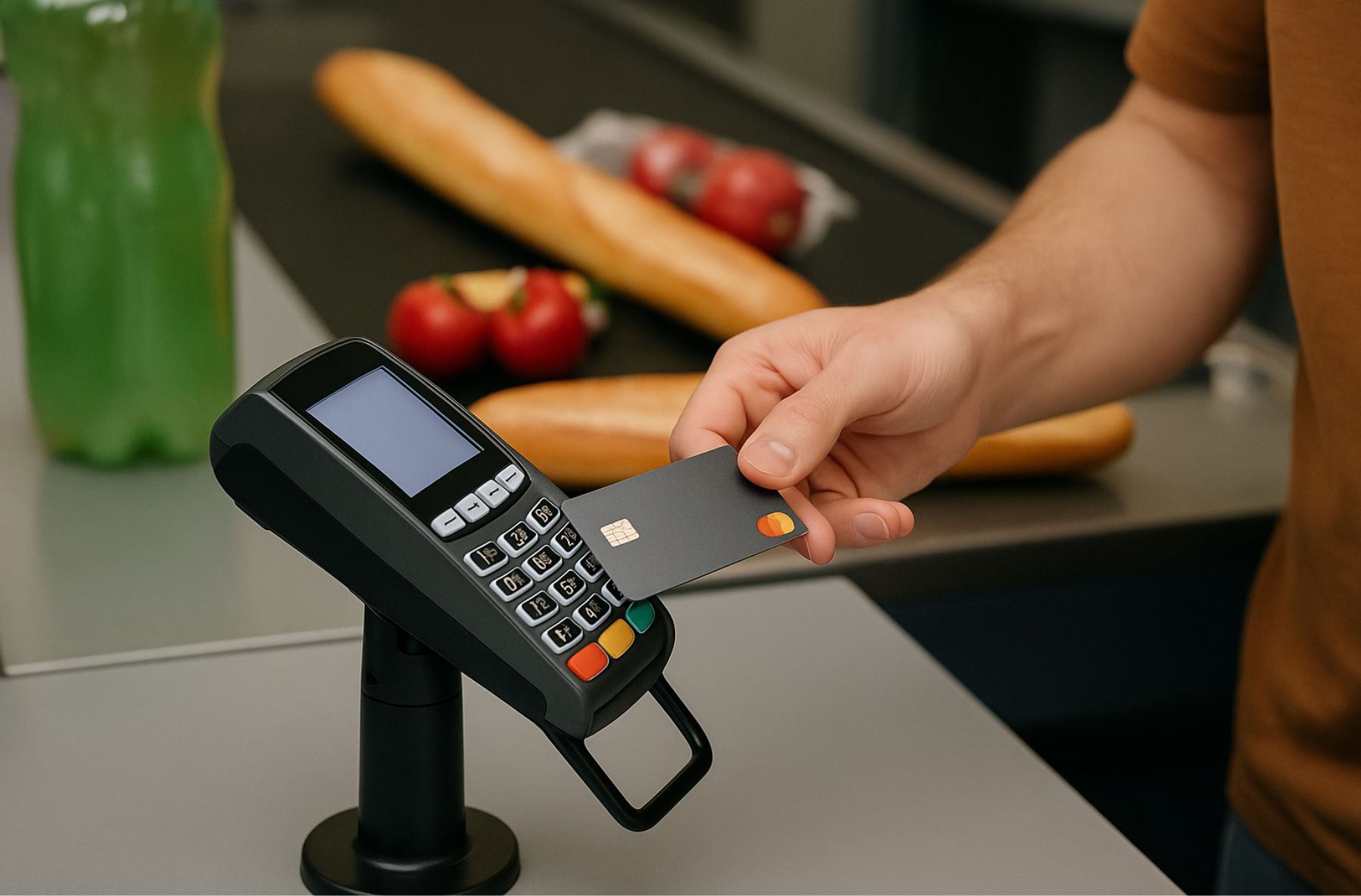
An everyday example is contactless payment at the checkout at Coop or Migros. The credit card containing the RFID chip is simply held against the payment terminal (the reader). The terminal sends out a signal that activates the RFID chip in the card. The chip transmits the payment data to the terminal, which processes the payment in seconds.
The problem of data theft
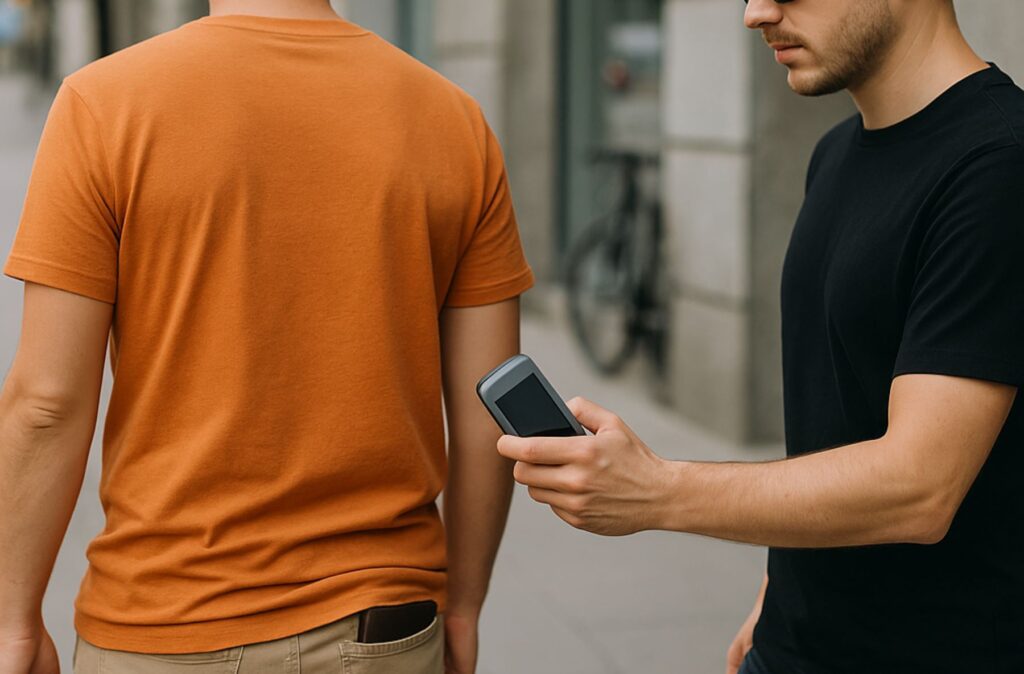
However, this technology can also be misused: skimming allows private RFID data to be stolen. Criminals use mobile RFID scanners that emit radio waves and activate the chips in credit cards, exactly like an official payment terminal. As soon as a card is within range (usually a few centimetres to a few metres), it is read without the owner noticing. The data can then be misused for online purchases or to create a copy of the card.
Our RFID blockers shield the radio waves and thereby prevent cards from being read without you noticing. NFC (Near Field Communication) is also based on RFID technology and is likewise used for contactless payment, for example with a smartphone or smartwatch. The difference: NFC only works over very short distances (a few centimetres), but allows direct communication between two devices. Our products reliably block both RFID and NFC signals, protecting all your sensitive data regardless of the system used.
All our RFID products are TÜV-certified and have also been tested by the University of the Federal Armed Forces in Munich, so secure protection is guaranteed.